
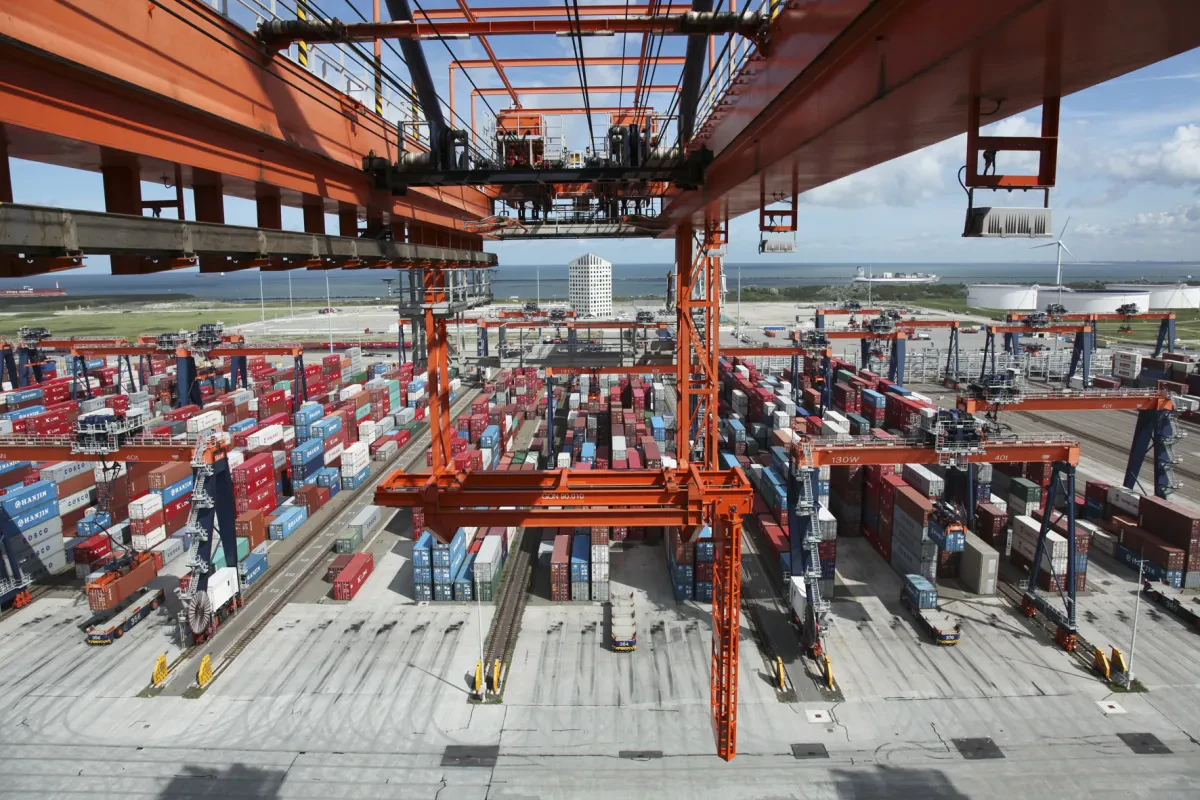
Total freight throughput fell slightly, mainly in dry bulk and crude oil
In the first quarter of 2018, 1.2% less freight passed through the Port of Rotterdam than in the same period last year. In total, 117.8 million tonnes were handled against 119.3 million tonnes in the same period in 2017. The fall mainly concerned the throughput of coal, iron ore, scrap and crude oil. In contrast, the growth in container throughput continued to increase significantly (+6.1% in TEU, +4.6% in tonnes). The throughput of mineral oil products increased, particularly distribution. The throughput of biomass and LNG increased spectacularly.
Allard Castelein, CEO Port of Rotterdam Authority: “The continued growth in container throughput is a confirmation that Rotterdam is taking an increasingly important position in the maritime connection networks of large shipping company alliances. We are seeing a somewhat more measured growth after the significant growth last year, and this is entirely in accordance with our expectations.”
Containers
Container throughput increased 4.6% by weight to 35.9 million tonnes and 6.1% by volume to 3.5 million TEU (the standard unit for containers). This growth is a continuation of the significant increase realised last year and is mainly a consequence of increased throughput performance of the port’s large container terminals. This is also necessary as the shipping companies that operate in Rotterdam in three large alliances view Rotterdam as an important hub in their networks, which means an increased concentration of cargo throughput in Rotterdam. This resulted in feeder volumes continuing to increase significantly by 7.5% to 0.6 million TEU. Feeder vessels transport containers with intercontinental cargo to and from other ports that are not visited directly by intercontinental (‘deep sea’) services. An increasing exchange is also taking place in Rotterdam between deep sea services, which enable shipping companies to offer their clients more combinations between loading and unloading ports in Asia and Europe. New connections with the eastern section of the Mediterranean also resulted in an increase in shortsea throughput by 6.9% to 0.7 million TEU.
Source: Port of Rotterdam (LF)
Source: Port of Rotterdam